Overview
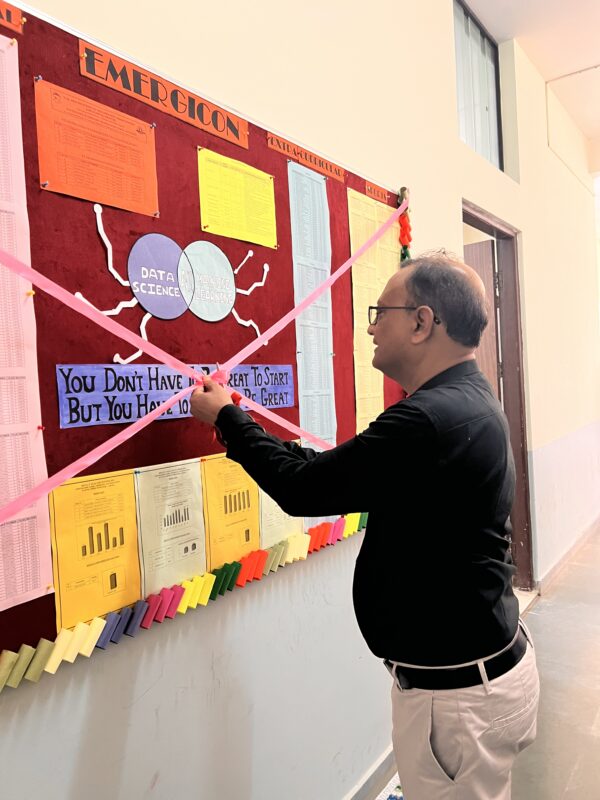
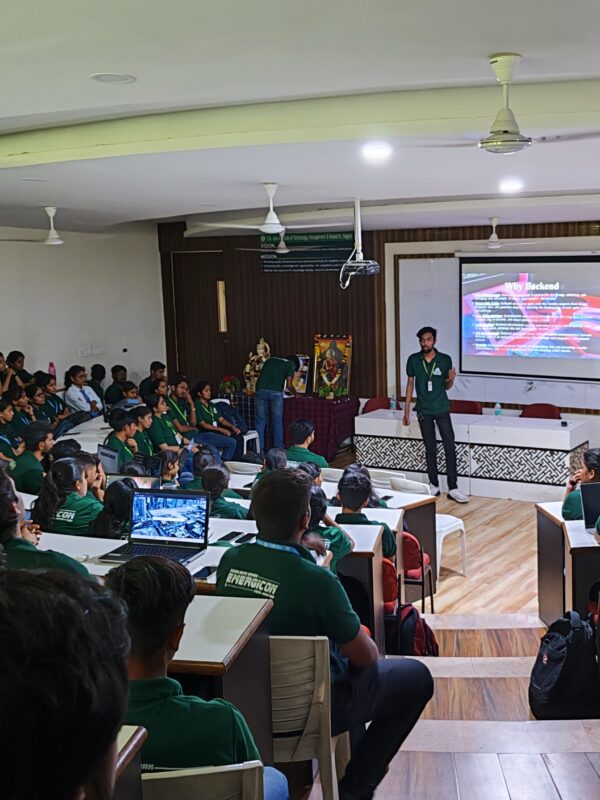
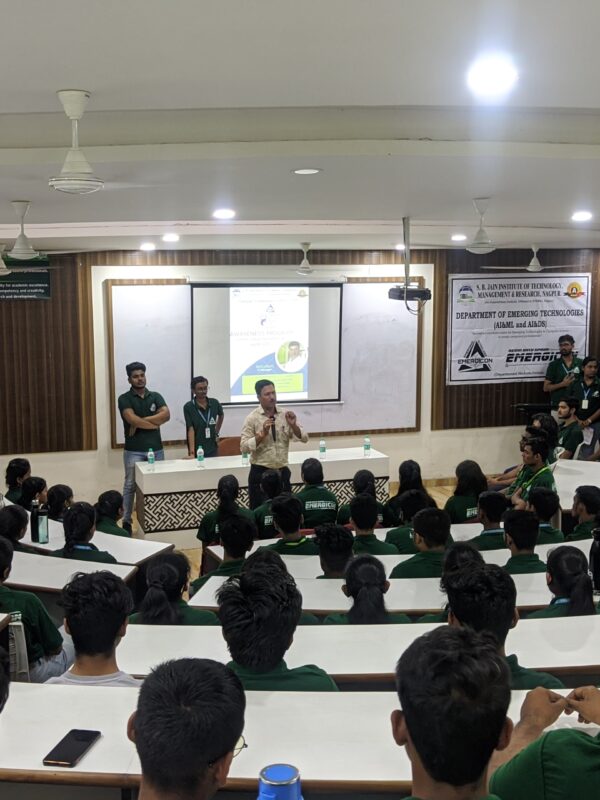
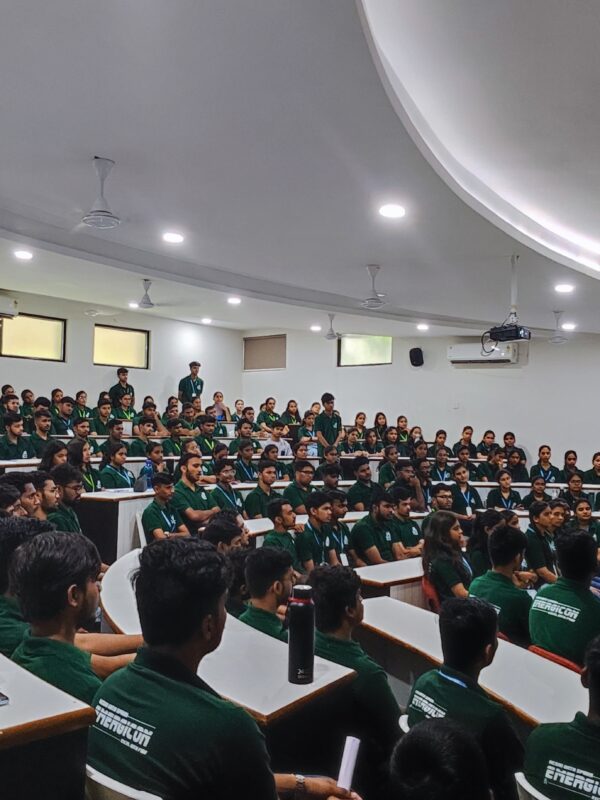
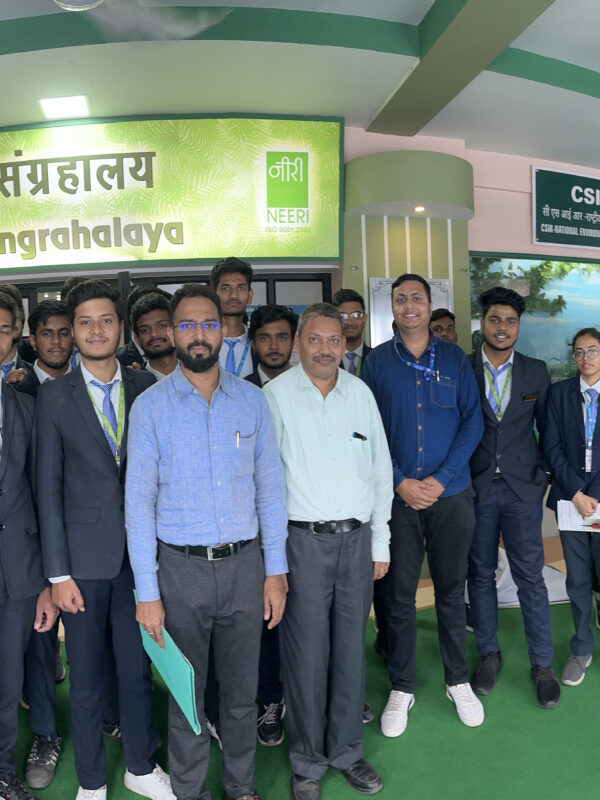
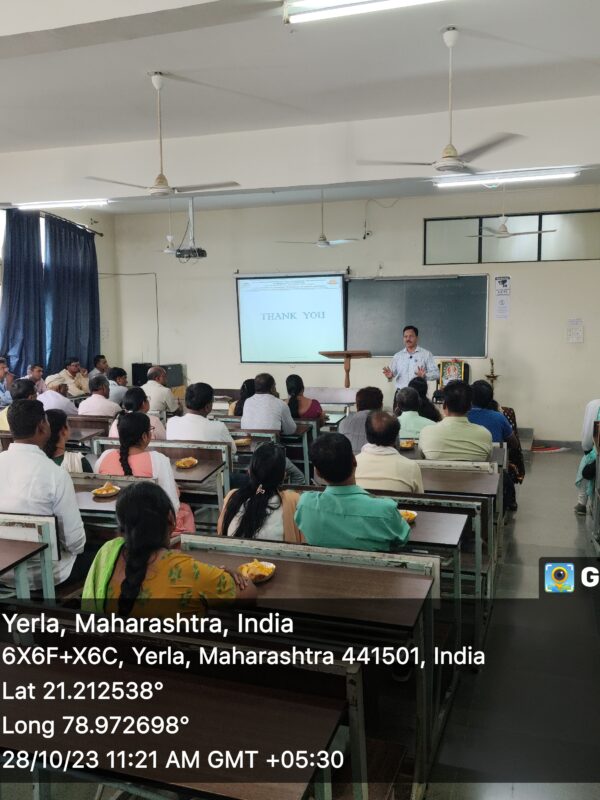
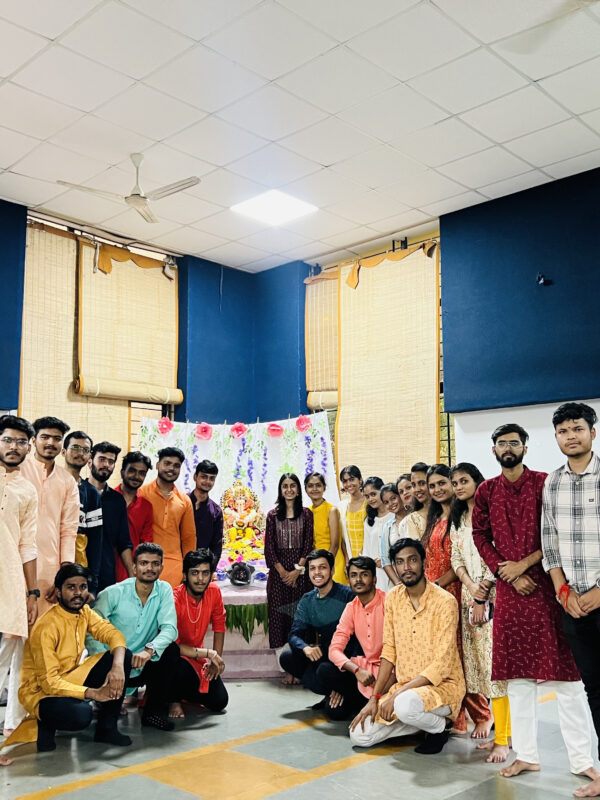
The Departmental Faculties have to their credit, Registered Patents and Research paper publications in reputed International Journals as well as Conferences.
Key Features:
- Research Excellence Departmental faculties have to their credit registered patents and research paper publications in reputed international journals and conferences, showcasing innovation and global recognition.
- Effective Teaching-Learning Well-planned and structured pedagogy with emphasis on concept clarity, case studies, and project-based learning.
- Open-source Laboratories Fully equipped computer labs with unique practices like theory followed by practical sessions, ensuring hands-on mastery.
- ICT-enabled Learning Access to NPTEL video lectures, streaming servers, and online examinations to support blended learning.
- Industry-based Projects & Internships Every student engages in live projects and internships, ensuring industry readiness and applied knowledge.
- Professional Society Activities Active participation in ACM and other professional bodies, fostering networking and skill development.
Placement Opportunities Strong placement support with opportunities in software companies, analytics firms, fintech, healthcare, and IT services
From The HoD's Desk

Department of Computer Science and Engineering (Data Science) is committed to nurturing future-ready professionals equipped with strong technical knowledge, analytical thinking, and innovative problem-solving abilities in the rapidly evolving field of Data Science and emerging technologies.
The department focuses on providing a balanced blend of academic excellence, industry-oriented learning, research exposure, and practical implementation through modern laboratories, skill development programs, workshops, expert sessions, and project-based learning. Our curriculum is designed to prepare students for real-world challenges in areas such as Artificial Intelligence, Machine Learning, Big Data Analytics, Cloud Computing, and Data Visualization.
To strengthen the technical culture and professional growth of our students, we have initiated the ACM Student Chapter under the Department of CSE (Data Science). The chapter aims to create a vibrant learning ecosystem by organizing coding competitions, technical talks, hackathons, seminars, and collaborative activities that encourage innovation, leadership, and teamwork among students.
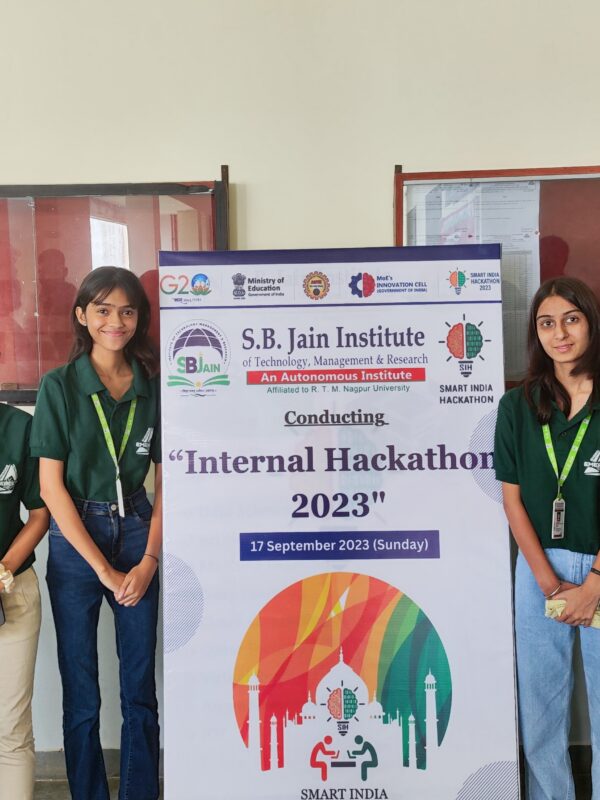
In line with our vision of fostering creativity and problem-solving skills, the department is actively preparing and mentoring students for participation in the Smart India Hackathon (SIH). Through dedicated training sessions, idea incubation, teamwork activities, and guidance from faculty mentors, we encourage students to develop innovative solutions to real-world problems and contribute towards nation-building through technology.
Our department continuously strives to build competent engineers and responsible professionals who can excel in academia, industry, research, and entrepreneurship. We remain committed to empowering students with knowledge, confidence, and opportunities that help them achieve excellence in their careers and make meaningful contributions to society.
Dr. Dipak Wajgi
Head, Department of CSEDS
hodcsecd@sbjit.edu.in
Mobile No:- 7030600096
Vision & Mission CSE (DS)
Vision
Become an excellent center for Emerging Technologies in Computer Science to create competent professionals.
Mission
- Impart quality education in order to enhance employability and ensure a quality teaching-learning process for developing competent professionals with ethics.
- Develop advanced technical and professional skills to capture entrepreneurship opportunities in a new era of technologies.
- Establish the linkages with industries and academia to understand and fulfill the needs of rapidly changing industries and for the betterment of society.
PEO's PO's and PSO's CSE (DS)
Engineering Graduate will be able to:
-
Engineering knowledge:
Apply the knowledge of mathematics, science, engineering fundamentals, and an engineering specialization to the solution of complex engineering problems.
-
Problem analysis:
Identify, formulate, review research literature, and analyze complex engineering problems reaching substantiated conclusions using first principles of mathematics, natural sciences, and engineering sciences
-
Design/development of solutions:
Design solutions for complex engineering problems and design system components or processes that meet the specified needs with appropriate consideration for the public health and safety, and the cultural, societal, and environmental considerations.
-
Conduct investigations of complex problems:
Use research-based knowledge and research methods including design of experiments, analysis and interpretation of data, and synthesis of the information to provide valid conclusions.
-
Modern tool usage:
Create, select, and apply appropriate techniques, resources, and modern engineering and IT tools including prediction and modeling to complex engineering activities with an understanding of the limitations.
-
The engineer and society:
Apply reasoning informed by the contextual knowledge to assess societal, health, safety, legal and cultural issues and the consequent responsibilities relevant to the professional engineering practice.
-
Environment and sustainability:
Understand the impact of the professional engineering solutions in societal and environmental contexts, and demonstrate the knowledge of, and the need for sustainable development.
-
Ethics:
Apply ethical principles and commit to professional ethics and responsibilities and norms of the engineering practice.
-
Individual and team work:
Function effectively as an individual, and as a member or leader in diverse teams, and in multidisciplinary settings.
-
Communication:
Communicate effectively on complex engineering activities with the engineering community and with society at large, such as being able to comprehend and write effective reports and design documentation, make effective presentations, and give and receive clear instructions.
-
Project management and finance:
Demonstrate knowledge and understanding of the engineering and management principles and apply these to one’s own work, as a member and leader in a team, to manage projects and in multidisciplinary environments.
-
Life-long learning:
Recognize the need for, and have the preparation and ability to engage in independent and life-long learning in the broadest context of technological change.
Program Educational Objectives(PEOs)
Have an ability to adapt to a rapidly changing environment by having learned and applied cutting-edge skills in emerging technologies.
Build a strong foundation in the field of artificial intelligence and data science to contribute significantly in the area of innovations and research.
Have strong work ethics, professional attitude, team spirit, leadership, and enterprising skills to serve industry and society.
Program Specific Outcomes(PSO’s)
PSO1. Ability to apply the knowledge of Artificial Intelligence and Data Science to solve industry and societal problems.
PSO2. Ability to choose or develop the efficient tool for data analysis and intelligent system.