Overview
The Department of Computer Science & Engineering, S. B. Jain Institute of Technology Management and Research was established in 2008 and is accredited by National Assessment and Accreditation Council (NAAC) with ‘A’ Grade. Department has started M. Tech Computer Science & Engineering program form session 2025-26 with an intake of 24.
The M. Tech. in Computer Science and Engineering (CSE) is a postgraduate program designed to develop advanced technical competence, research aptitude, and problem-solving skills required to address complex challenges in modern computing. The program provides a strong foundation in core computer science principles while enabling specialization in emerging areas such as Artificial Intelligence, Machine Learning, Data Science, Cyber Security, and Cloud Computing.
The curriculum emphasizes a balanced integration of theory, practical implementation, and research-oriented learning, preparing graduates for careers in industry, academia, and research organizations.
From The HoD's Desk
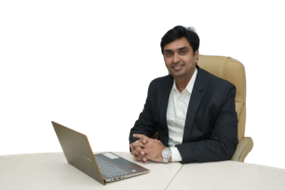 We are living in an era of smart technologies, where almost any device can be transformed into a smart system through Computer Science and its wide-ranging applications. In this context, the Department of Computer Science & Engineering (CSE) stands as one of the most preferred departments of the Institute, a distinction achieved through the sustained and collective efforts of all stakeholders of the department.
The department is well equipped with modern and compatible infrastructure, including high-configuration laboratories and ICT-enabled classrooms, to support effective teaching and learning. We are committed to building a strong foundation in both theoretical concepts and practical skills of Computer Science and Engineering, enabling our students to evolve into knowledgeable, responsible professionals and lifelong learners.
To bridge the gap between academia and industry expectations, the department offers several value-added and add-on courses beyond the university curriculum, aligned with current IT industry requirements. To keep pace with the dynamic nature of the industry, the department regularly organizes industry–institute interactions in the form of seminars, guest lectures, industrial visits, webinars, and workshops conducted by industry experts for both students and faculty members. These initiatives significantly contribute to making our students industry-ready.
The institute also maintains collaborations with various IT industries, providing students with opportunities for internships and industry-based projects. Alongside technical excellence, we place strong emphasis on the overall personality development of our students. Through the departmental student forum, “SuiGeneris,” and the “IEEE Students’ Chapter”, students’ talents are identified, nurtured, and groomed towards success by enhancing their interpersonal, leadership, and professional skills.
Every year, our students add new feathers to the department’s crown through their academic achievements, innovative projects, and professional accomplishments. We take pride in their success and remain committed to providing an environment that fosters excellence, innovation, and ethical values.
Vision & Mission
Vision
Develop creative, competent, and socially responsible computing professionals empowered with a strong foundation in computer applications, driven by innovation, ethics, and real-world problem solving.
Mission
- To provide quality infrastructure and expert faculty for excellence in computer application education.
- To nurture competence, creativity, and ethical values through skill-oriented and experiential learning.
- To collaborate with industry for knowledge exchange, innovation, and research-driven development.
PO's, PEO's & PSO's
PO 1: Independently carry out research /investigation and development work to solve practical problems.
PO 2: Write and present a substantial technical report/document.
PO 3: Demonstrate a degree of mastery over the area as per the specialization of the program. The mastery should be at a level higher than the requirements in the appropriate bachelor program.
PO 4: Use modern tools, approaches and algorithms to solve complex engineering problems reaching sustained conclusion.
PO 5: Design, develop and analyse systems or processes that fulfil the needs within economic, environmental and social constraints.
PEO 1: Acquire comprehensive knowledge of advanced computational techniques and effectively apply them to solve complex, real-world challenges across diverse application domains.
PEO 2: Demonstrate proficiency in designing and developing innovative computing solutions using modern technologies, while preserving ethical standards and lifelong learning.
PEO 3: Apply recent literature for conducting impactful research in computer science and engineering, and exhibit strong technical and managerial skills to prosper as competent professionals in multidisciplinary environments.
Program Specific Outcomes(PSO’s)
PSO 1: Ability to propose efficient solutions using emerging technologies, platforms, tools, and interdisciplinary knowledge for real-world challenges in computing.
PSO 2: Ability to conduct comprehensive research and apply critical thinking to solve complex computational, societal, environmental, and industrial problems.